
Anti-Aging & Lifting
One Trip and Done? Why korean plla filler Rarely Fits a Single Seoul Visit
A korean plla filler course usually means about three monthly sessions. Here is how that maps onto Seoul trips, follow-up at home, and what our clinic offers.

A course of korean plla filler usually means about three treatment sessions spaced roughly a month apart, with the change showing up gradually over the following months. For a visitor, that timing is the hard part. If you fly home after the first session, the next two still need a plan, and so does the question most people raise first: who looks at your face if a firm bump shows up three weeks later, thousands of kilometres from the clinic that injected it?
One fact about us before you plan anything: PLLA (poly-L-lactic acid) is not on Time Return Clinic's treatment menu in Yeouido. Our filler line is 3D Balance filler, planned across the whole face, and the collagen side of our work runs through Rejuran, where PharmaResearch selected us as a Rejuran SVIP clinic. The PLLA timing below still applies whichever clinic you choose.
If you're sorting this out against real dates, send two things on WhatsApp: one daylight photo of the area that bothers you (temples, cheeks, jawline) and the days you could be in Seoul. We reply with consultation times that fit those dates, so you know whether a visit lines up before you buy a flight.
What PLLA does differently from a gel filler
PLLA is a collagen stimulator. A hyaluronic acid (HA) gel takes up space where it's placed, so the shape change is visible at the same visit. PLLA particles prompt your own tissue to build collagen over weeks. The American Society of Plastic Surgeons (ASPS) describes it as a filler that causes the body's own collagen production, with results appearing gradually over a few months.
That one difference rewrites the calendar. With a gel, the doctor sees the shape on the treatment chair and can adjust. With PLLA, nobody sees the final effect on the day, including the person injecting.
People who search for korean plla filler often come from a specific place: hollow temples or flattened cheeks, and a feeling that added gel won't look natural on their face. Some have already been told at home that they'd need a lot of product. The instinct makes sense. It just runs on a slower clock than a typical trip allows.
How many Seoul trips does a PLLA course take?
Plan on about three treatment visits a month apart if you follow the pattern ASPS describes. For someone flying in, that means either three trips or a stay of around two months. Here's how the main approaches compare on travel alone:
| Approach | Visits in a typical course | What it means for the trip |
|---|---|---|
| PLLA (collagen stimulator) | About three, roughly monthly (ASPS) | Several trips or a long stay; final look judged months later |
| Rejuran (PN skin booster) | Set at the consultation | Short aftercare window; next session suggested at the visit |
Some people try to squeeze a series into one longer trip. Whether a shorter gap between sessions makes sense is the treating doctor's call. With a product whose effect takes weeks to show, a rushed second session means injecting again before anyone has seen what the first one did.
Three timing mistakes with collagen-stimulating filler abroad
Booking one trip for a multi-session product. If the plan assumes three sessions and you can only come once, you may end up with one partial session and an unfinished plan. Decide before you fly whether you can return, or whether a single-visit option suits your face better.
Risks and side effects to know
Flying home the day after. The U.S. Food and Drug Administration lists raised bumps under the skin (nodules or granulomas) among the less common risks of dermal fillers. With a product that keeps working for weeks, a lump may only be noticed after you're home. Know who you would see locally before you leave.
Judging the result in the hotel mirror. What you see in the first days is not the result ASPS describes. That builds over the following weeks, which is why photos taken on departure day tell you very little about a PLLA session.
What can go wrong, and why distance changes the plan
Every filler carries risk, and the most serious one is rare but real. The FDA calls unintentional injection into a blood vessel the most concerning risk of dermal fillers: it can block blood supply to tissue, and complications can include vision abnormalities, including blindness. Nodules and granulomas are less common and may need further injections, oral antibiotics or surgical removal, according to the same FDA page.
Distance doesn't change those odds. It changes what happens next. A blood-vessel problem needs same-day attention from whoever is closest, so before any filler abroad, get the product name and the amount used, and keep them written down for a doctor at home. The CDC's medical tourism guidance makes the same point in general terms: arrange follow-up care at home before you travel and carry copies of your records.
Results vary from person to person, and whether any filler suits you is decided at the in-person exam, not from a photo.
Doctor's note
A product that needs three spaced sessions is a hard fit for one week in Seoul, and I think it's fairer to say that before someone books than after they land. Genuine product, exact dose is a standing rule at this clinic. For any filler, anywhere, I'd add one habit for the patient: if you can't name what went into your face, ask before you leave the room.
If follow-up after flying home is what's holding you back, send your travel dates and one line on what worries you most about the weeks afterwards. We reply with consultation times that fit those dates, and you can put that exact question to the doctor face to face at the consultation.
If building collagen is the goal, what's on our menu?
Rejuran is the closest match to that idea, though it works differently from PLLA. It's a polynucleotide (PN) skin booster made from salmon DNA and injected into the dermis, which is about 0.5 to 2 mm thick, where it stimulates fibroblasts to produce collagen and elastin. Its job is skin quality: texture, fine lines, thin and dry skin. It isn't designed to refill a hollow temple the way volume products are.
Dr. Kim Yoo-ju, a certified Rejuran Healer Expert and Rejuran clinical advisor, consults face to face and injects by hand, setting depth point by point. Why that matters around thin areas is covered in why hand injection suits thin skin. If you're comparing versions, what the Rejuran S, I and H letters mean decodes the menu, and choosing between Rejuran HB and Rejuran Healer covers the two names people ask about most. Pain is the other common hesitation; how plasma 5-step anesthesia works explains the numbing levels from 0+ to 5+.
For volume and contour, 3D Balance filler is the filler work here. Dr. Kim is listed as a key doctor for Neuramis filler and as chief clinical lecturer for Restylane filler. Which areas get treated, and whether filler is the right tool at all, is set after the assessment.
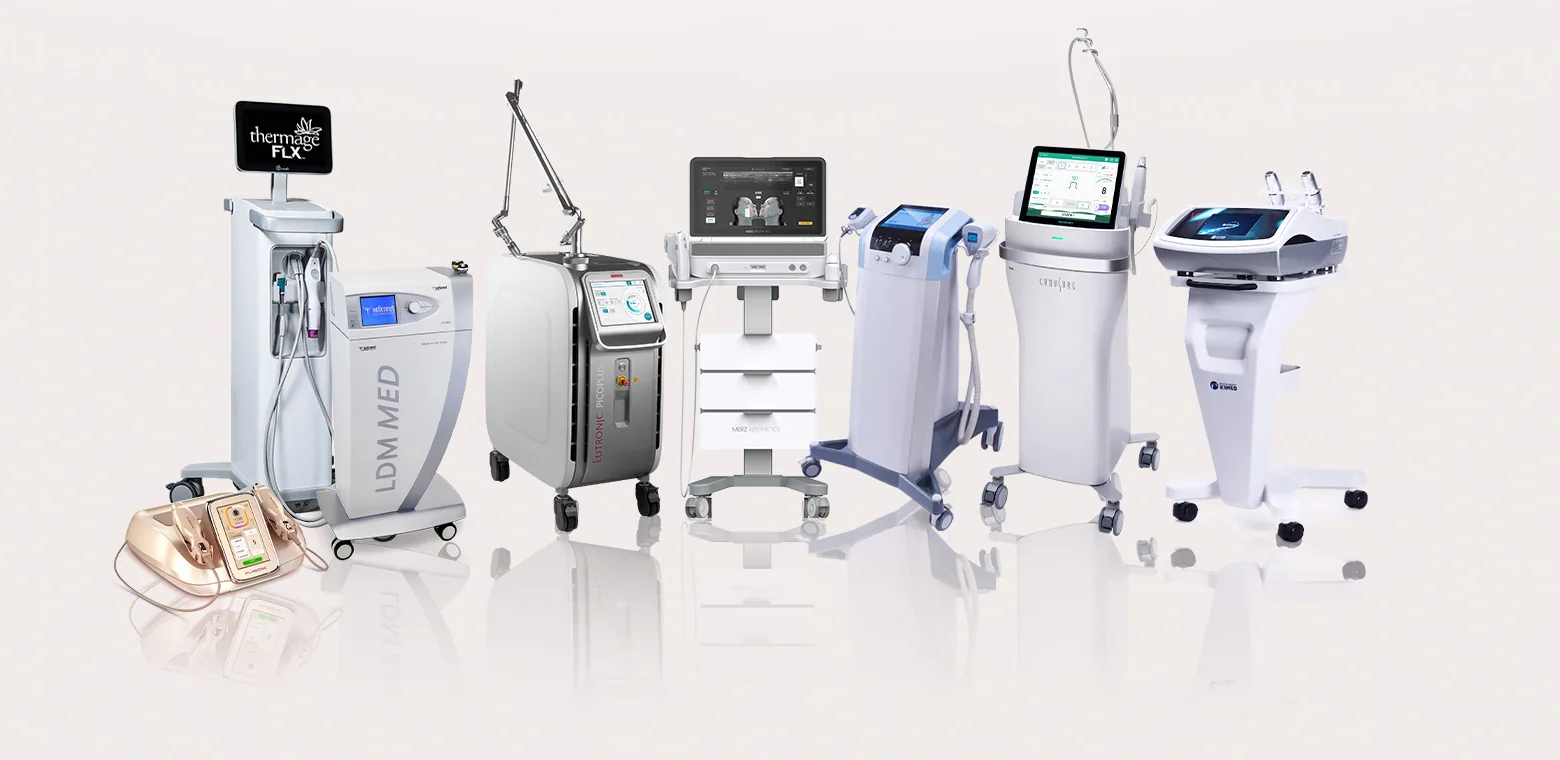
For firmness rather than volume, the menu also includes Ultherapy Prime, Thermage FLX and patented collagen-film thread lifting (registered Mar 2, 2021). Dr. Kim is a Thermage TTT Master.
Fitting a clinic visit into a short Seoul stay
The clinic is open Mon–Fri 10:00–20:00 and Sat 10:00–16:00, closed Sundays and public holidays. Line 9 runs from Gimpo Airport to Yeouido Station, and the clinic is about 4 minutes on foot from Exit 4 (Lines 5 and 9).
Put the treatment early in the trip, not on your last day. After Rejuran, our own aftercare guidance says most daily activities are possible right away, but sauna, steam rooms, hard exercise and harsh exfoliation are best avoided for the first 1–3 days, with light makeup from 24 hours. Small raised bumps at the injection points usually settle in about 1–3 days and mild redness in about 1–2 days. Those are days you'd rather spend in Seoul than on a plane wondering.
If you're coming from elsewhere in Asia, the Seoul trip guide for visitors from the Philippines and the Hong Kong visitor's planning guide walk through booking and timing step by step.
Reading PLLA photos before you book anywhere
Photos of collagen stimulators are hard to judge. The change builds over months, and lighting or head angle can do more than the product. The questions in how to read clinic result photos apply to any injectable, PLLA included: when was each photo taken, under what light, and after how many sessions.
The FDA adds two plain rules worth keeping: don't buy filler products online, and treat filler as a medical procedure done by a licensed provider. Asking which product will be used, by name, is a normal question anywhere.
A daylight photo of your temples or cheeks plus the dates you could travel is enough to start on WhatsApp. We reply with consultation times that fit. At that visit you can ask which option on our menu fits your face and how many days to keep open in Seoul afterwards.
Questions we get about korean plla filler
Is PLLA the same thing as hyaluronic acid filler?
Can I start a PLLA course in Korea and finish it at home?
How long does PLLA last compared with HA filler?
Does Time Return Clinic offer PLLA filler?
What should I bring to a filler consultation in Seoul?
Results vary by individual. Every procedure carries the possibility of side effects, explained before you agree to treatment. This article is general information from the clinic, not a diagnosis. Suitability is decided at the consultation.
Written by
Dr. Kim Yoo-ju
Chief Director · Time Return Clinic
- Patent holder: thread lifting with collagen film (registered January 2021); also holds Korea’s only body thread lifting patent (as of March 2, 2021)
- Rejuran clinical advisor and Rejuran Expert
- Thermage clinical advisor and TTT Master
Related articles
Anti-Aging & Lifting
Threads Hold, Ultrasound Tightens: Choosing a Korean Lift and Knowing When to Skip It
A Korean lift can mean threads, Ultherapy Prime or Thermage FLX. What each can and can't do, the real risks, and which faces are better off skipping it.
· 7 min read

Anti-Aging & Lifting
Korean Thread Lift or a Lifting Device? Threads Move Tissue, Devices Tighten It
A korean thread lift raises sagging tissue with absorbable threads. See who it suits, its risks, and how it compares with ultrasound and RF lifting devices.
· 7 min read
Skin Treatments
Analysis First, Plan Second: How korea skin care Works Inside a Seoul Clinic
In-clinic korea skin care starts with a skin analysis, then a doctor-set plan in a private room. See what happens, who it suits and what to send on WhatsApp.
· 7 min read
Ready to plan your Rejuran visit?
Send your skin concern and dates. The clinic replies with available times.
Message us your plan