

Anti-Aging & Lifting
Threads Hold, Ultrasound Tightens: Choosing a Korean Lift and Knowing When to Skip It
A Korean lift can mean threads, Ultherapy Prime or Thermage FLX. What each can and can't do, the real risks, and which faces are better off skipping it.

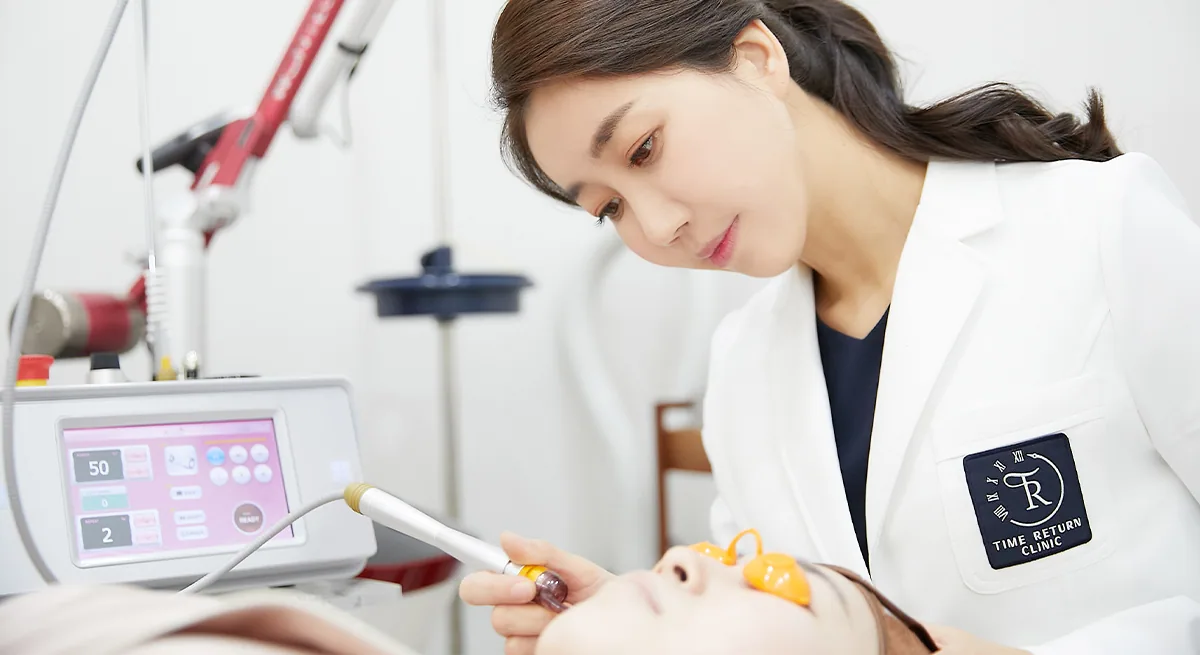
If you're flying in for a korean lift, the fear underneath is usually what happens after the flight home, when a thread puckers or pokes and the doctor who placed it is half a world away. At Time Return Clinic in Yeouido, the face threads use a collagen-film thread lifting method patented in Korea (registered Mar 2, 2021), and the doctors who plan the treatment also perform it.
Not every sagging face is a thread face, though. Here is how the three common routes compare before we get to who should skip them.
| Option | What it changes | Main trade-off |
|---|---|---|
| Thread lift | Repositions soft tissue along a line: jowl, cheek, brow, neck | Can dimple, show or work its way out; the effect fades |
| Ultherapy Prime or Thermage FLX | Tightens skin and deeper layers with heat | Gradual, modest change; can't move tissue that has dropped far |
| Filler in cheeks or temples | Restores lost volume so tissue sits higher | Adds support only; rare vascular events |
If you already know which area bothers you, send one message with the area (jowls, brows, neck) and your travel dates. We reply with the consultation times that fit your trip, so you can book the assessment at the start of your stay instead of the day before your flight.
What does a thread lift do under the skin?
A thread lift places fine absorbable threads with small cogs or barbs in the fat layer under the skin. The cogs grip tissue so it can be drawn up and held along a chosen line. The American Society of Plastic Surgeons describes it as a minimally invasive option with subtler, shorter-lived results than a surgical facelift.
Two things happen over the following months. At first the threads hold tissue mechanically. Then they slowly dissolve, and the body lays down collagen along the track they leave, which is why skin can feel firmer even as the lift itself softens.
The basic biology above stays the same, and the lift still fades with time.
For smaller areas such as the brows, the eye area, frown lines and the neck, there's edge lifting, which works on a short line instead of the whole face contour. The face method itself is explained on the patented thread lifting page.
Where the ultrasound and radiofrequency devices fit
Energy devices tighten; they can't carry dropped tissue back up. Ultherapy Prime focuses ultrasound energy at set depths below the skin, and Thermage FLX heats the skin with radiofrequency. Both lean on the body's own collagen response, so change tends to build over months.
That makes them a reasonable match for early laxity, a softening jawline in your thirties or forties, or skin that feels thinner than it looks. They're a weak match for a jowl that hangs below the jawline when you sit upright. Dr. Kim Yoo-ju is a Thermage clinical advisor and TTT Master, and the clinic's TR Ulthera lifting plan mixes Ulthera, Thermage and Rejuran when skin quality and firmness both need work.
Can filler lift jowls or hooded eyes?
Partly, and only indirectly. Filler placed along the cheekbone or in a hollow temple restores support, so the tissue below can sit a little higher and the jowl or outer brow looks less heavy. Nothing is pulled up.
The risks differ from threads. The U.S. Food and Drug Administration lists bruising, swelling and lumps among common effects, and warns that filler injected into a blood vessel can, rarely, cause skin damage or vision problems. That rare event is why injecting around the temples and eyes calls for a doctor who knows the vessel map of the face.
When a Korean lift is the wrong tool
Some faces need surgery, some need nothing yet, and some need to wait. A non-surgical Korean lift tends to disappoint, or carries more risk than it's worth, in these situations:
- Heavy skin excess or deep neck bands. Threads can't remove skin. A surgical facelift does that, and it's a plastic surgeon's operation that isn't on our menu.
- Very thin faces with little fat. Threads sit in the fat layer, so with little padding the ends and cogs are more likely to be felt or seen.
- Hooded upper eyelids from extra skin. Brow threads can open the outer eye slightly, but excess eyelid skin is an eyelid surgery question.
- Active acne, infection or a fresh rash where the threads would enter. The skin gets treated first.
- Blood thinners, a bleeding disorder, pregnancy, or a big event a few days later. These change the timing or rule the lift out until the doctor has the full picture.
- Hoping for a facelift result. A thread lift gives a visible lift along a line. It won't turn back a decade.
The decision is mostly physical. A doctor compares how far the cheek and jowl drop between lying down and sitting up, how thick skin and fat feel between two fingers, and whether the sag comes from loose skin, a heavy fat pad or volume lost under the cheekbone. Each of those points to a different tool, which is why two people with the same jowl in a selfie can get opposite advice.
Thread lift risks and side effects to plan for
Most problems after a thread lift are minor and fade: bruising, swelling, a tight or pulling feeling, and soreness when you open your mouth wide in the first days. The ASPS safety page also lists infection, visible or palpable threads, dimpling, asymmetry and threads that work their way out.
Dimpling often settles as swelling goes down. A thread that keeps pulling, or an end that pokes through the skin, usually needs to be trimmed or removed, which is a short in-person fix. Results vary from person to person, and whether threads suit your face at all is settled at the consultation.
Filler risks are covered in the section above.
Doctor's note
The complication I'd want a traveler to think about is the small one. A dimple near the cheek, or a thread end you can feel at the hairline, is simple to deal with while you're still in Seoul and awkward once you're home. That's the main reason I'd rather someone book a lift early in a trip than on the last afternoon.
If timing is your main worry, send your arrival and departure dates on WhatsApp along with the area you want lifted. We reply with consultation times inside that window, and you'll see at a glance how many days sit between treatment and your flight.
How should a short trip be planned around a lift?
Put the consultation and treatment near the start of the stay and keep the last days quiet. The CDC's medical tourism guidance advises leaving time to recover before flying, getting copies of your medical records, and arranging follow-up care at home before you travel.
On the ground: Line 9 runs from Gimpo Airport to Yeouido Station, and the clinic is about 4 minutes on foot from Exit 4. Hours are Monday to Friday 10:00–20:00 and Saturday 10:00–16:00, closed Sundays and public holidays, so landing on a Saturday evening means Monday is the earliest visit.
Before you leave Seoul, ask for a note of which threads or device were used, which areas were treated and what to watch for. Take it to your own doctor if anything feels wrong later; it saves a lot of guessing.
Who you meet, and what to bring
The first conversation is one-to-one with the director, not a counselor. Dr. Kim Yoo-ju holds the collagen-film thread lifting patent and is a key doctor for TAPS, Quill and Aprodemion thread lifting. Dr. Kim Dong-hu, a family medicine specialist, is Director of the Lifting Center. Both are on the doctors page.
Three things make that first conversation more useful:
- a list of medicines and supplements, especially anything that thins the blood;
- the products and rough dates of any past filler, threads or energy treatments on your face;
- a photo of yourself from several years ago, which shows where tissue has moved.
If you'd like to start now, send your travel dates on WhatsApp together with one line about the area that bothers you, and add any past filler or thread treatments with rough dates. We reply with consultation times that fit your stay, and the talk about which lift, if any, begins with your history already on the table.
Questions we get about korean lift
Is a Korean thread lift the same as a facelift?
How long does a thread lift last?
Can threads lift the neck or the chin line?
Is a fox eye or hiko nose lift part of this?
Can a thread lift be combined with Rejuran?
Results vary by individual. Every procedure carries the possibility of side effects, explained before you agree to treatment. This article is general information from the clinic, not a diagnosis. Suitability is decided at the consultation.
Written by
Dr. Kim Yoo-ju
Founder & Medical Director · Time Return Clinic
- Patent holder: collagen-film thread lifting; also holds Korea’s only body thread lifting patent
- Rejuran clinical advisor and Rejuran Expert
- Thermage clinical advisor and TTT Master
Related articles
Anti-Aging & Lifting
Korean Thread Lift or a Lifting Device? Threads Move Tissue, Devices Tighten It
A korean thread lift raises sagging tissue with absorbable threads. See who it suits, what can go wrong, and how to plan the trip to Yeouido, Seoul. A Korean…
· 7 min read
Anti-Aging & Lifting
Should You Get Korean Filler on a Short Trip? Here's When to Wait
Thinking about korean filler in Seoul? Learn the real risks, five situations where waiting is wiser, and how many days to leave before your flight home.
· 8 min read
Skin Treatments
Fat Dissolving Injections Korea: Who They Suit and What to Plan
Fat dissolving injections korea guide from Time Return Clinic in Seoul: what they do, who they suit, risks and how to plan a short trip. Message us to plan.
· 5 min read
Ready to plan your Rejuran visit?
Send your skin concern and dates. The clinic replies with available times.
Message us your plan