
Anti-Aging & Lifting
Korean Lifting Treatment: Who It Suits, and When I'd Say Not Yet
Korean lifting treatment explained by a Seoul doctor: threads vs Ultherapy Prime and Thermage FLX, who each suits, and when to fix skin quality first.

A Korean lifting treatment is usually one of two things: threads placed under the skin to hold loose tissue in a new position, or an energy device, focused ultrasound or radiofrequency, that heats deeper layers so they tighten gradually. Which one fits comes down to what is actually sagging, and for some faces my answer is neither, not yet. If you're fitting this into five days of leave, the worry underneath is plainer: will I be back at my desk on Monday with bruising along my jaw? I plan anti-aging in a sequence, skin quality first, then lift, then tone, so a lift is sometimes the second step on your list.
If Monday is what worries you, message the clinic with your skin concern and the date you're due back at work.
What does a Korean lifting treatment actually do under the skin?
Three mechanisms, working at different depths. Threads sit under the skin and hold tissue in a new position: loose skin is drawn back and anchored beyond the hairline, and as dissolving threads break down, the body builds collagen around them. The American Society of Plastic Surgeons describes thread lifts as an option for reducing the appearance of wrinkles and early jowls.
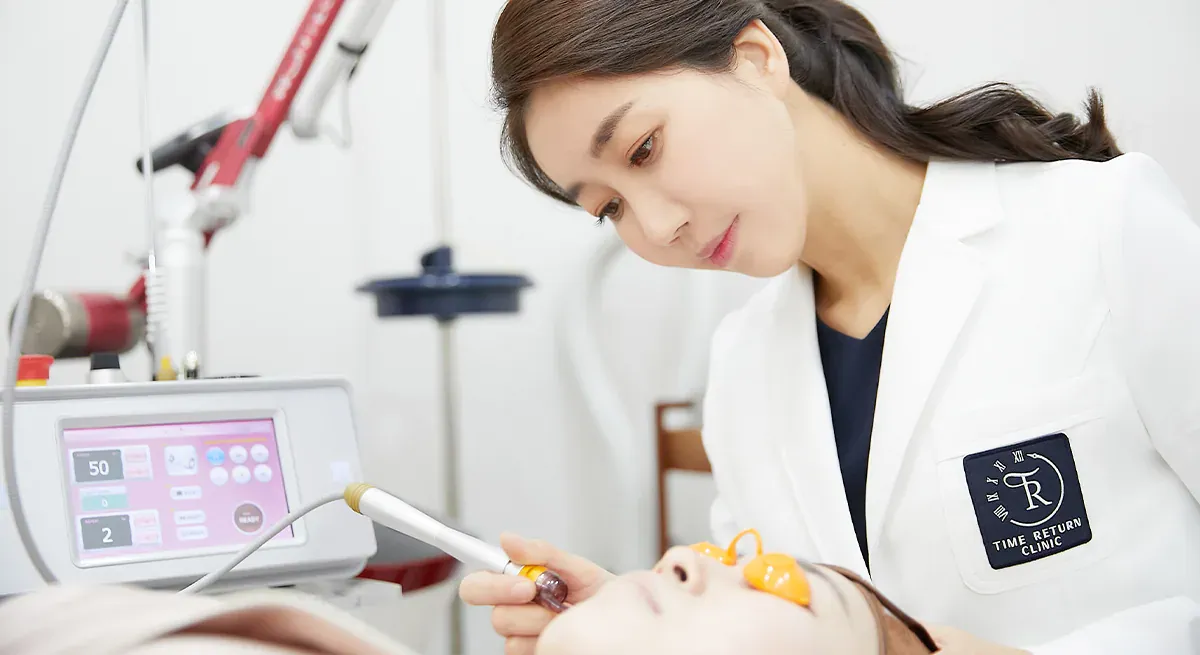
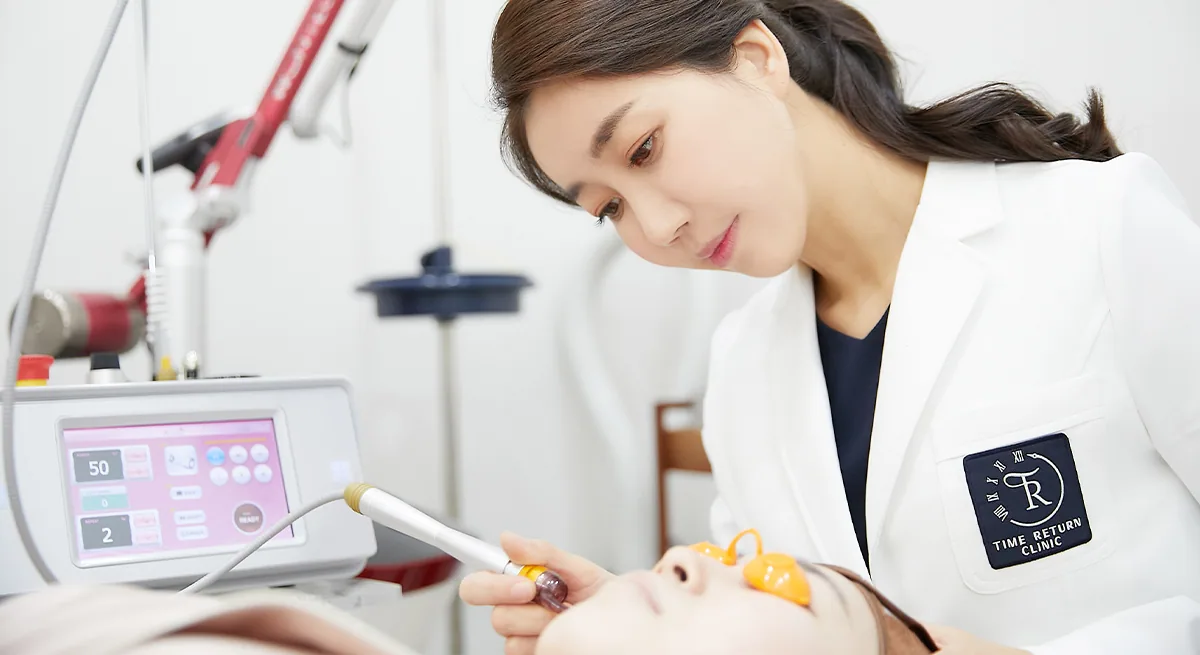
Focused ultrasound, which is what Ultherapy Prime delivers, places heat at points deep under the skin, down to the SMAS, the layer of muscle and connective tissue that a surgical facelift repositions. Radiofrequency, which is Thermage FLX, heats the skin more broadly and nearer the surface. When we combine the two, Thermage tightens the surface first and Ulthera then lifts the deeper SMAS layer.
A plain way to picture it: threads work like a tie-back on a curtain, and the devices are closer to shrinking a loose sweater slightly so it fits closer. Neither replaces surgery when the skin is heavy enough to fold over itself.
How do threads lift, and where do they go in?
Our face thread lift, Leeds Turn, uses a collagen-film thread I patented in Korea in 2021. The design choice that matters most to someone flying home is where the entry points go: inside the hairline rather than on the face, and the threads aren't brought out toward the cheekbones. Temporary bruising or swelling can still happen, and the amount differs from person to person.
Two things lower the chance of bruising. An infrared vein viewer called AccuVein shows vessels so they can be avoided, and cannula-type threads cause less tissue damage, which lowers the chance of bruising, swelling and pain. For the numbing injections themselves, I use an anesthesia system first used in dentistry, and local numbing can be added during the procedure.
Threads aren't only for the face. Body Ssok lifting uses a separate patented body thread for areas such as the abdomen and thighs, often after liposuction or a large weight loss. That's a different conversation from a jawline, with its own aftercare.
Who I'd point toward ultrasound or radiofrequency instead
If your skin has gone slack without really dropping, a device usually makes more sense than threads. A softening jaw in your early 40s, a little crepiness on the eyelids, cheeks that look tired rather than lower: these are layers that respond to heat.
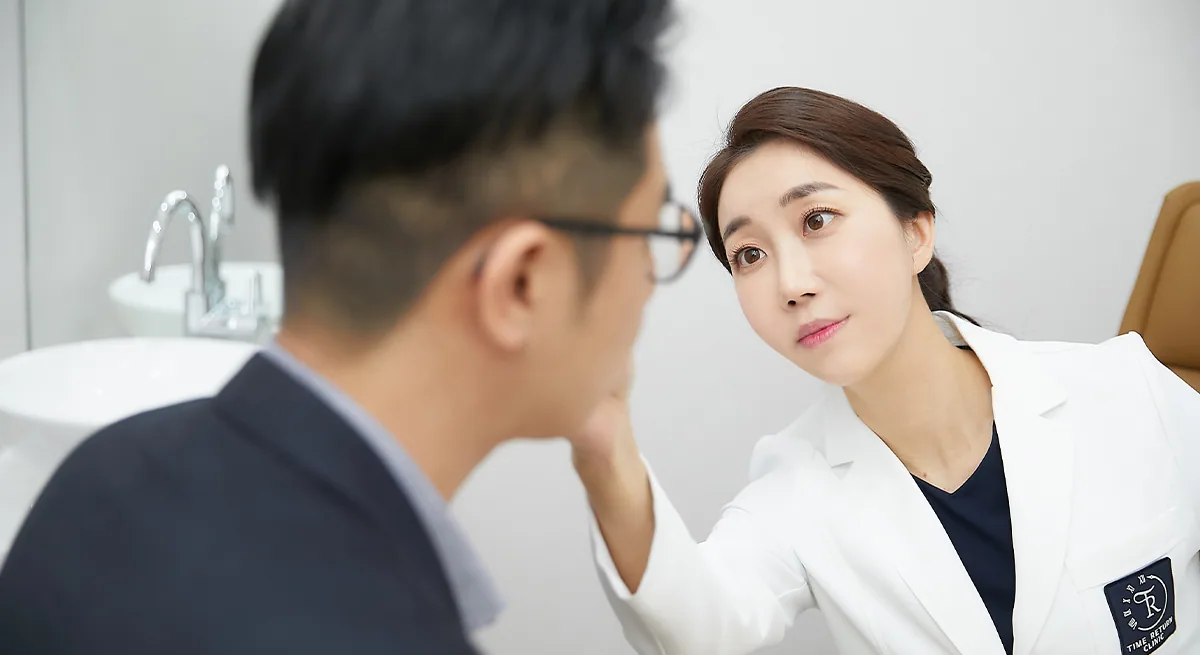
That's also the answer if you're looking for an eye lifting treatment in Korea. Thermage FLX has an EYES tip for under the eyes, the eyelids and the area around them, a FACE tip for areas such as the deeper cheeks and smile lines, and a FACE & BODY tip. Each tip is used for one patient only. The clinic shows you the tip number, registers it on the Thermage site or app, gives you a certificate and sends images of the genuine tip and shots. As a Thermage TTT Master, the first thing I want to know is which area bothers you, because that decides the tip.
If you came here after a video about a device with a different name, the useful questions are the same for any of them: which layer does it heat, how deep, and what is it meant to change?
When would I tell you not to lift on this trip?
More often than people expect. These are the situations where I'd steer you elsewhere or ask you to wait.
Thin, dry, crinkled skin. Lifting thin skin pulls the surface tighter without improving it, and fine crinkles can show more. Here I'd start with skin quality, usually Rejuran, and lift later. The product is the same everywhere; why the same Rejuran gives different results comes down to how it's placed, and the letters on the menu are explained in what Rejuran S, I and H mean.
Acne scars or uneven texture. A lift moves tissue; it doesn't resurface it. If marks are what you see first in the mirror, read what a skin booster can do for acne scars before you think about threads.
Heavy laxity with deep folds at the jaw or neck. Threads and devices are generally used for mild to moderate sagging. When skin hangs, many doctors would suggest a conversation with a plastic surgeon about surgery, and I'd rather you hear that before a trip than after it.
An event within a few days. Bruising after threads is temporary, but it doesn't follow your calendar. If you have a wedding or a big presentation that week, a device, or nothing this time, is the safer plan.
Blood-thinning medication, an active skin infection or inflammation in the area, or pregnancy are reasons to postpone and talk it through first.
Doctor's note
A lift that disappoints is often a mismatch between the skin and the method. When thin skin is lifted, the jawline can look tighter while the texture looks worse. That's why I plan in order: skin quality first, then lift, then tone. If your skin isn't ready to hold a lift, I'd rather spend this trip on the skin and leave the threads for another visit.
How much of your leave does it take?
A Korean lifting treatment takes less of your leave than surgery and more than a lunch break, and I can't give you an exact day count before seeing your face. What I can do is help you order the week.
We're open Monday to Friday 10:00 to 20:00 and Saturday 10:00 to 16:00, closed Sundays and public holidays. Every plan begins with a doctor consultation, so put that early. If you land at Gimpo on Wednesday night, Line 9 takes you to Yeouido Station, about four minutes on foot from Exit 4, and a Thursday consultation leaves the rest of the week in front of you. Ask at booking whether treatment can follow on the same day.
If threads are in the plan, put them at the start of the trip, so any bruising or swelling has time to start fading while you're still in Seoul. After focused ultrasound or radiofrequency, redness and tenderness are short-lived for many people. If Rejuran is part of a combined plan, the small bumps it leaves usually settle in about 1 to 3 days; the Rejuran downtime timeline walks through those days. When you leave, the limousine bus stop back to Incheon Airport is right in front of the clinic.
Send your flight dates on WhatsApp, and mention whether a weekday evening suits you, since we're open until 8 pm Monday to Friday; we reply with available times.
Risks and side effects to know
Threads can cause bleeding, infection or inflammation, and temporary bruising and swelling are common. Less often, a thread can leave a small dimple in the skin, uneven tension between the two sides, or an end that can be felt under the skin; these usually need a check by the doctor who placed them.
With focused ultrasound and radiofrequency, redness, swelling, tenderness and brief numbness or tingling can happen, and burns or nerve irritation are rare. Results vary by individual, and whether any of these methods suits your face is decided at the in-person exam.
Plan for home as well: keep a note of what was done and on which date.
Before you write to us
Write one line about what you notice first in the mirror: the jawline, the eyes or the texture. A Korean lifting treatment is chosen by what's loose and where, so that line is a more useful start than any device name you've been reading about. Send it to the clinic with your travel dates.
Questions we get about korean lifting treatment
Can I have Rejuran and a lift on the same trip?
Is a jawline lift the same as a fat-dissolving injection?
Which doctors work at the clinic?
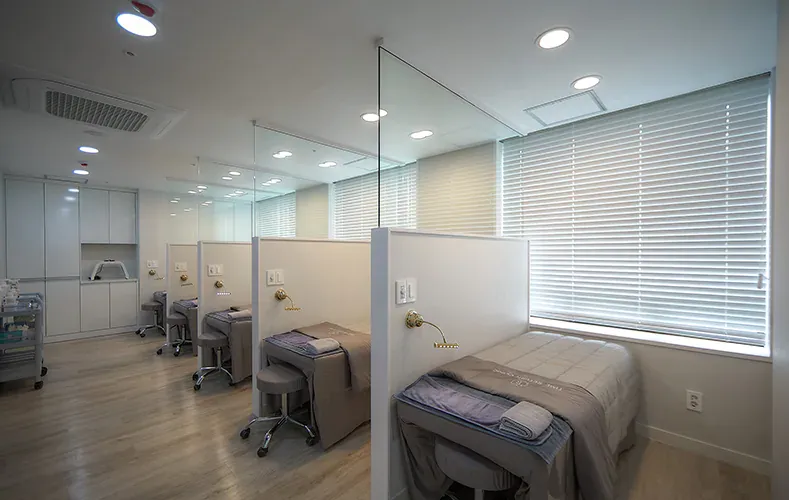
Is the treatment done in a private room?
Results vary by individual. Every procedure carries the possibility of side effects, explained before you agree to treatment. This article is general information from the clinic, not a diagnosis. Suitability is decided at the consultation.
Written by
Dr. Kim Yoo-ju
Chief Director · Time Return Clinic
- Patent holder: thread lifting with collagen film (registered January 2021); also holds Korea’s only body thread lifting patent (as of March 2, 2021)
- Rejuran clinical advisor and Rejuran Expert
- Thermage TTT Master: User, Advanced and Master courses completed (Solta Medical Academy, 2026)
Related articles
Anti-Aging & Lifting
ACE PDO Thread Lift in Korea: What the Label Means
ace pdo thread lift korea: what the ACE label means on a menu, the risks of threads, hairline entry points and how to time a thread lift around your trip.
· 7 min read
Anti-Aging & Lifting
Korea body filler: what it is, why we don't offer it, and what we do for body lines
Planning Korea body filler in Seoul? The FDA has not approved fillers for breast or buttock size. See what body options exist and how many days to plan.
· 6 min read

Anti-Aging & Lifting
One Trip and Done? Why Korean PLLA Filler Rarely Fits a Single Seoul Visit
A Korean PLLA filler course usually means about three monthly sessions. Here is how that maps onto Seoul trips, follow-up at home, and what our clinic offers.
· 7 min read
Ready to plan your Rejuran visit?
Send your skin concern and dates. The clinic replies with available times.
Message us your plan